Cliffside Park Calls
Our Edgewater base is one mile from Cliffside Park borough lines, which means our typical arrival time on an active loss is under ten minutes regardless of which neighborhood reports the call. The borough has two distinct restoration profiles. The Hudson Heights condo and rental towers (Vista, The Galaxy, and the redeveloped properties along Palisade Ave) generate single-unit losses where the priority is fast cleanup before damage spreads through party walls. The older single-family stock in the central and western neighborhoods generates the standard Bergen older-housing call pattern — aging plumbing, slow leaks behind plaster, basement intrusion during heavy rain events.
What Working with Our Edgewater Crew in Cliffside Park Looks Like
When a property loss happens in Cliffside Park, the workflow looks the same as it does anywhere else our Edgewater crew dispatches. You call, a real human answers — not an automated phone tree, not an after-hours answering service that takes a message and goes back to bed. We get the address, the loss type, and any building access notes (gate codes, building management contacts, COI requirements) on that first call so the truck rolls toward your address with the right equipment for what we're walking into.
For active emergencies — pipe burst, sewage backup, fire aftermath, storm intrusion through a damaged building envelope — our standard target is on-site within the hour anywhere we cover. Cliffside Park sits roughly 1 miles from our Edgewater base, so on a normal-traffic day that translates to 10 to 20 minutes door-to-door. Storm season we pre-stage equipment for surge events so individual response times don't slip even when call volume spikes across the corridor.
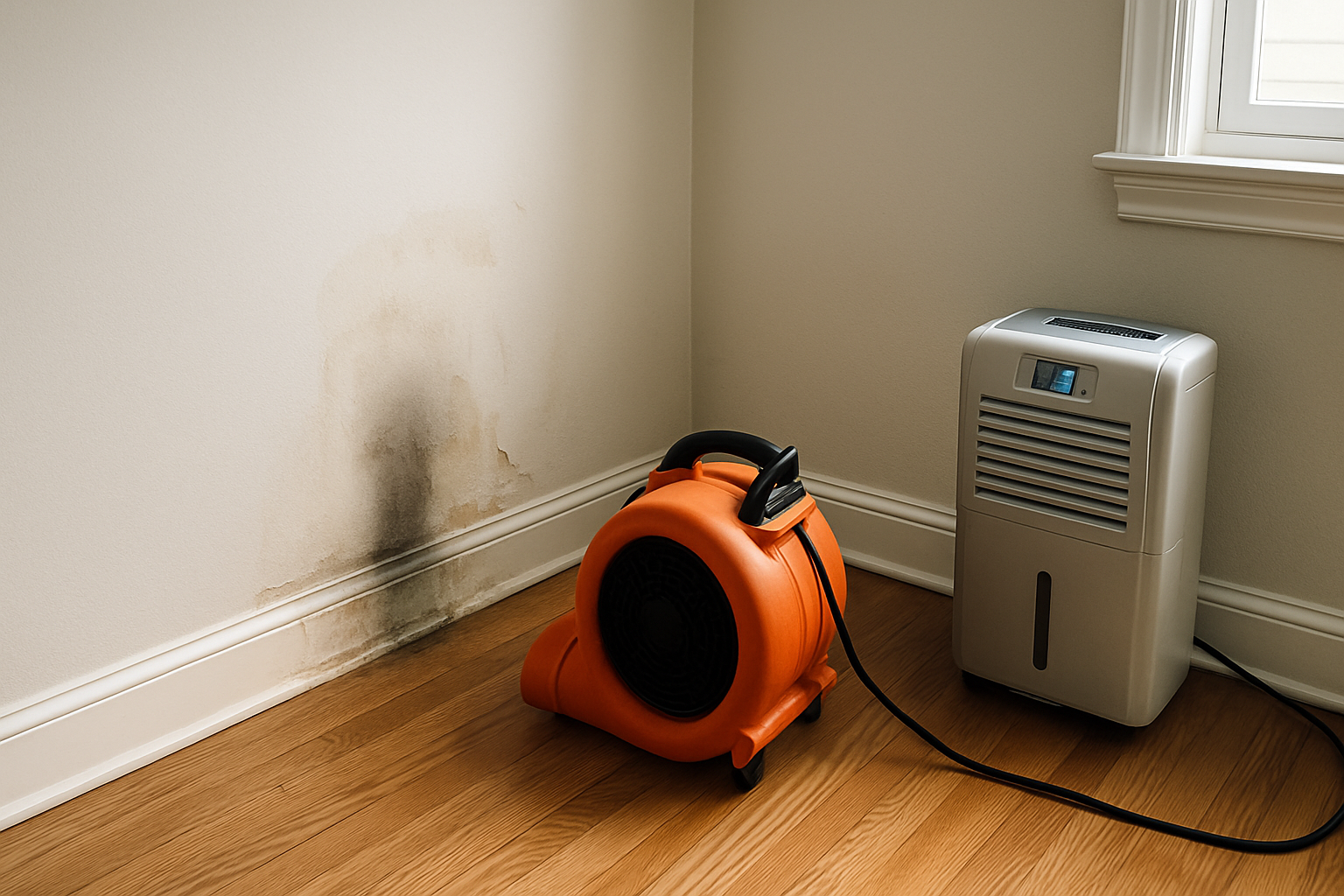
What happens once we're on-site is the same disciplined sequence on every job: source-control first (water off, electrical isolated, contaminated areas contained), then photo + moisture documentation of every wet substrate, then equipment deployment sized to the loss volume. Daily monitoring visits with logged moisture readings until every wet material returns to dry-standard moisture content for that specific substrate. Reconstruction handled by the same crew when needed, scoped against the original mitigation documentation rather than as a separate negotiation. One contract, one phone number, one team accountable from the first call to the final walk-through.
Insurance documentation in Bergen County
Most of our Cliffside Park work is insurance-billed. We document moisture readings against a building diagram, photograph every wet surface before equipment goes down, write Xactimate scopes the adjuster can settle without a callback, and bill carriers directly when authorized. The cause-of-loss narrative we write determines which policy bucket the claim lands in — homeowners (sudden + accidental), NFIP (true flood from rising water), or sewer/water backup endorsement (combined-sewer-overflow events) — so getting that documentation right at hour one is what determines whether the claim closes cleanly or drags through arbitration.